Dismiss Modal

Understanding Healthcare

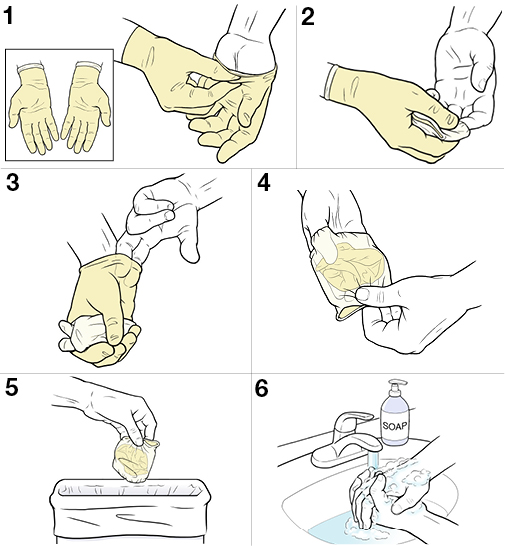
Sterile Technique for Taking Off Gloves

Choose a preferred language


Step-by-Step

6 steps for removing sterile gloves.

© 2000-2026 The StayWell Company, LLC. All rights reserved. This information is not intended as a substitute for professional medical care. Always follow your healthcare professional's instructions.

Related Articles
Read article
Infectious Diseases
Bloodborne Pathogens: When an Accident Happens

Suddenly you're faced with an accident on the job. With a quick study of the situation, you can decide how best to handle it. Before you help, take the right steps to protect yourself and others from infection from bloodborne pathogens.

Read article
Infectious Diseases
Bloodborne Pathogens: After an Accident

Whether or not housekeeping is a regular part of your job, at some time you might be involved in cleaning up after an accident. Correct cleaning of the accident site keeps blood or body fluids away from yourself and others. Read on to learn more.

Read article
Infectious Diseases
Bloodborne Pathogens: If You're Exposed

Bloodborne pathogens are disease-causing germs carried in blood or other body fluids. If blood or body fluids have touched your eyes, mouth, nose, or any other opening or break in your skin, you've been involved in an exposure incident. Here's what you need to know.

Read article
Infectious Diseases
Understanding Bloodborne Pathogens

Blood or body fluids may contain germs (pathogens) that can cause disease. If there is an accident at work involving blood or body fluids, these germs can be spread. These are the most common causes of infection in the workplace. Read on to learn more.