Genes are inherited from our biological parents in specific ways. One of the basic patterns of inheritance of our genes is called X-linked dominant inheritance.
What is X-linked dominant inheritance?
X-linked dominant inheritance happens when a gene responsible for a trait or disorder is located on the X chromosome. The gene acts in a dominant manner. This means that both males and females can display the trait or disorder when they have only 1 copy of the gene inherited from a parent.
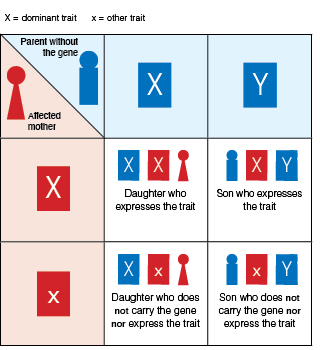
Depending on the disorder, a gene that is X-linked dominant may cause a pregnancy with a male not to survive. Scientists and doctors say that there is "lethality" in males. This means that the gene can be passed from mother to daughter, but if it is passed to a son, the pregnancy likely ends up as a miscarriage. Only those sons without the gene survive and are born healthy. One example of an X-linked dominant condition is called incontinentia pigmenti (IP).
What is incontinentia pigmenti?
IP is extremely rare. The main features occur in the skin. It is seen more often in females. In newborns, a blistering rash occurs. This is followed by the blisters becoming raised, like warts. Next, brown swirls appear in the skin. This is followed by the appearance of light-colored swirls. The result is a "marble-cake-like" appearance on the skin. Other health problems can be seen in IP involving the eyes, central nervous system, teeth, nails, and hair. The severity varies from person to person, even among affected people in the same family.
Featured in