The rotator cuff is a group of 4 muscles and tendons in the shoulder. Tendons are tough tissues that connect muscles to bone. The 4 muscles and their tendons form a cuff around the head of the upper arm bone. The rotator cuff connects the upper arm to the shoulder blade. It keeps the shoulder joint stable and gives it strength. It also helps the shoulder joint with certain movements. These include reaching the arm over the head and rotating the arm.
If tendons are injured or strained, they may get irritated and swollen (inflamed). This is called tendonitis. Rotator cuff tendonitis may cause shoulder pain. It may make it hard to move your shoulder.
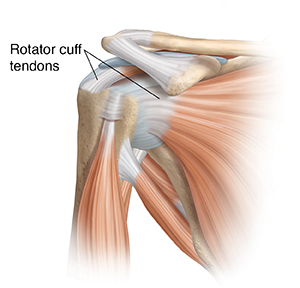
What causes rotator cuff tendonitis?
When the rotator cuff tendons are injured or overworked it causes tendonitis. The most common cause of injury is repetitive overhead activities. These can be work-related activities such as reaching, pushing, or lifting. Or they can be sports-related activities such as throwing, swimming, or lifting weights.
Symptoms of rotator cuff tendonitis
Pain on the side of the upper arm at the shoulder is the most common symptom. Pain may get worse with overhead movements. Or it can get worse when you raise the arm above shoulder level. It may also hurt to lie on the shoulder at night.
Treatment for rotator cuff tendonitis
Treatment may include:
-
Active rest. This lets the rotator cuff heal. Active rest means using your arm and shoulder, but not doing activities that cause pain. These might be reaching overhead or sleeping on the shoulder.
-
Cold packs. Putting ice packs on the shoulder helps reduce swelling and ease pain.
-
Medicines. Prescription or over-the-counter medicines can help ease pain and swelling. NSAIDs (nonsteroidal anti-inflammatory drugs) are the most common medicines used. They may be taken as pills. Or they may be put on the skin as a gel, cream, or patch.
-
Arm and shoulder exercises. These help keep the shoulder joint moving as it heals. They also help improve the strength of muscles around the joint.
Possible complications
You may be tempted to stop using your shoulder completely to prevent pain. But doing so may lead to a condition called frozen shoulder. To help prevent this, follow instructions you're given for active rest and for doing exercises to help your shoulder heal.
When to call your healthcare provider
Call your healthcare provider right away if you have any of these:
-
Fever of 100.4°F (38°C) or higher, or as advised by your provider
-
Chills
-
Symptoms that don’t get better, or get worse
-
New symptoms
Author: Michels, Karen
© 2000-2026 The StayWell Company, LLC. All rights reserved. This information is not intended as a substitute for professional medical care. Always follow your healthcare professional's instructions.
Orthopedics CTA
Find a DoctorRelated Articles
Understanding Patellofemoral Pain Syndrome
Patellofemoral syndrome is a condition that causes pain on the front of the knee. Learn about causes, symptoms, treatment, and possible complications.
Herniated Intervertebral Disc
A herniated disc happens when a spinal disc tears. Read on to learn about home care and general care for this condition.
Hand Bruise
A bruise causes swelling and some bleeding under the skin. Learn how to care for it at home and when to call for help.
Finger Dislocation
How to care for your finger after a dislocation.