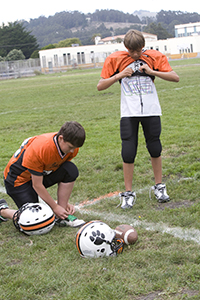
Osgood-Schlatter disease (OSD) is a painful knee problem that can happen in active young people. It almost always gets better with rest and simple treatment. But you have a role to play.
What are the symptoms?
If you’ve felt a sharp pain below your kneecap while being active, you may have Osgood-Schlatter disease. This is a painful bump that forms just beneath the knee. It can happen in one or both knees. Other symptoms include:
-
A dull ache in your knee while at rest.
-
Soreness and swelling below the kneecap.
-
Pain with kneeling.
Who develops this problem?
Osgood-Schlatter disease most often happens in boys who are 11 to 15 years old. But younger boys and some girls can have it, too. Osgood-Schlatter disease is usually caused by overusing the knee. Kids who play sports that involve running or jumping can develop this problem. These sports include basketball, soccer, football, sprinting, volleyball, and gymnastics.
Rest is the ticket
Osgood-Schlatter disease most often happens while you’re still growing. But it’s not “growing pains.” It’s a medical problem. And it needs attention. If you rest your knee and briefly change how active you are, you'll most likely get better. It may help to reduce the amount time you are active in sports. You may not need to stop completely. Work with your health care provider to make a plan. Make sure the planfits safely fits with your athletic goals.
You may have to wear a special strap around your knee. Or you might need knee padding to protect your knee from direct force. Stretching the hamstring and the quads may help. Strengthening exercises may help. It may help to take over-the-counter pain medicines (nonsteroidal anti-inflammatory drugs, or NSAIDs). Talk with your provider before taking these medicines.
Only in rare cases will you need further treatment. Just focus on giving your knee a little time and a lot of rest.
Note to parents
Osgood-Schlatter disease may briefly slow your child down. But the knee often heals with self-care. Rest is crucial. Rest speeds healing. And it keeps the problem from getting worse. Taking care of it now may prevent the need for knee surgery when your child is an adult. Contact your child’s health care provider if you need to know more about Osgood-Schlatter disease.

Orthopedics CTA
Find a DoctorRelated Articles
Leg Cramps
A muscle cramp or spasm is a strong contraction of the muscle fibers.
Wrist Splint
A splint is designed to prevent movement of the bones, muscles and tendons. Quick-release wrist splints are used because of their comfort and convenience for wrist and hand injuries.
Boxer's Fracture
You have a fracture, or break, of one of the bones in your hand. This causes pain, swelling, and sometimes bruising. This injury is treated with a splint or cast.
Plantar Fasciitis
Plantar fasciitis is a painful swelling of the plantar fascia. Read on to learn how to care for it.