The hip is one of the largest weight-bearing joints in the body. It’s also a common place for a fracture after a fall—especially in older people. Hip fractures are even more likely in people with osteoporosis, a disease that leads to weakened bones.
A healthy hip
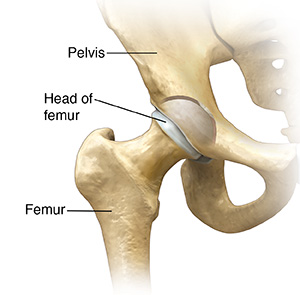
The hip is a ball-and-socket joint where the thighbone (femur) joins the pelvis. When the hip is healthy, you can walk, turn, and move without pain. The head or ball of the femur fits into a socket in the pelvis. The ball and socket are each covered with smooth cartilage. This allows the ball to glide easily in the socket. Blood vessels supply oxygen and nutrients to keep the hip joint healthy.
A fractured hip
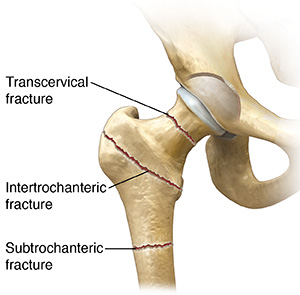
The hip can fracture in many places. Most often, the fracture occurs in the upper part of the femur. In rare cases, you can also have more than one type of fracture at a time:
-
Transcervical fracture. A break across the neck of the femur, just under the ball. This type of fracture can interrupt blood flow to the joint.
-
Intertrochanteric fracture. A break down through the top of the femur.
-
Subtrochanteric fracture. A break across the upper shaft of the femur.

Orthopedics CTA
Find a DoctorRelated Articles
Herniated Intervertebral Disc
A herniated disc happens when a spinal disc tears. Read on to learn about home care and general care for this condition.
Understanding Patellofemoral Pain Syndrome
Patellofemoral syndrome is a condition that causes pain on the front of the knee. Learn about causes, symptoms, treatment, and possible complications.
Understanding Compartment Syndrome
Compartment syndrome most often affects the legs, arms, feet, hands, and buttocks. It is a medical emergency that should be treated right away.
Hand Bruise
A bruise causes swelling and some bleeding under the skin. Learn how to care for it at home and when to call for help.