Endoscopic plantar fasciotomy (EPF) is one of the surgeries used to treat chronic strain of the plantar fascia. If this ligament-like band that runs along the bottom of your foot is inflamed, you're likely to have pain on the inside of your foot, where the arch and heel meet. EPF is an outpatient procedure. It takes about an hour to perform. It may be done at a hospital, a same-day surgical facility, or in your doctor's office.
Before your surgery
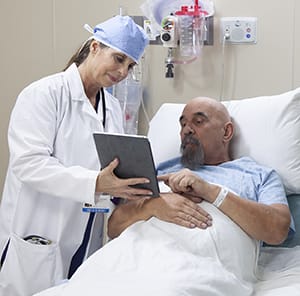
Follow these instructions before surgery:
- Follow any directions you are given for not eating or drinking before surgery.
- If you take daily medicine, ask if that should be stopped as well.
- At the facility, you'll be given consent forms to sign. Your temperature and blood pressure will be checked. You may also be trained in how to use crutches.
- It's normal to feel a little nervous before surgery. If you are very worried, you may be given a sedative to help you relax.
Your anesthesia
You may be given general anesthesia to make you sleep during the procedure. If I.V. (intravenous) sedation and a local anesthetic are used, you will be awake during surgery. But you will be drowsy and relaxed.
During the procedure
Your doctor makes 1 or 2 incisions. These incisions are less than a 1/2 inch long. They may be on each side of the heel or both on one side of the foot. Next, a special scope and camera are slipped under the fascia. This lets your surgeon watch the procedure on a nearby monitor. Your surgeon then cuts part of the fascia near the heel bone. If you are awake, you may hear people talking and feel pressure. You should not feel pain. Tell your doctor if you do.
Risks and possible complications of EPF
Risks and possible problems include:
- Infection.
- Slow healing.
- An ache on the outside of the foot.
- Nerve entrapment.
- Return of symptoms.

Orthopedics CTA
Find a DoctorRelated Articles
Knee Arthroscopy: Conditions Treated
Arthroscopy is used to find and treat knee problems. These include tears in the meniscal cartilage, joint loose bodies, or anterior cruciate ligament (ACL) tears.
Treating Corns and Calluses
Learn about the different treatments for corns or calluses.
Understanding Bone Grafting
Bone grafting is surgery to repair and rebuild bones that are damaged or diseased. This surgery can be done to fix bones almost anywhere in your body.
Trigger Point Injection
If you have muscle pain or spasms, it may be due to a trigger point, which is a tight, painful knot of muscle fiber. Your health care provider can inject medicine into the trigger point to ease pain.