The procedure is over soon, but you won’t recover overnight. For the first week, you may feel more back pain than usual. This is normal. It may take
In the hospital
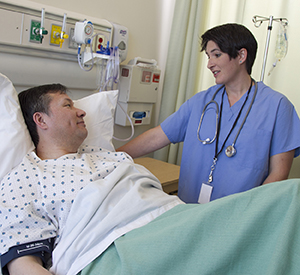
After your procedure, you’ll be moved to the recovery room. You may stay there for
-
A prescription for pain medicine to take at home
-
Instructions on how to take care of yourself during your recovery
-
A back brace, if needed
At home
For the first
-
Rest and heal at home.
-
Be careful not to bend or twist.
-
Limit your sitting time as advised by your healthcare provider.
During this time, you will have a follow-up appointment with your healthcare provider. Depending on how your recovery goes:
-
You may start to exercise as directed by your healthcare provider or physical therapist.
-
You may return to work as soon as
4 weeks after the procedure, or as directed by your healthcare provider or physical therapist.
When to call your healthcare provider
Contact your provider right away if you have:
-
Increasing redness or drainage from your needle insertion site
-
Increasing pain, weakness, or numbness in your legs
-
A fever above
100.4 °F (38 °C), or as directed by your provider -
Loss of bowel or bladder control
-
A severe headache

Orthopedics CTA
Find a DoctorRelated Articles
Evaluation Procedures for Orthopedic Problems
To help the orthopedist determine your treatment, you'll need a physical exam, a medical history profile, and a description of symptoms.
Total Hip Replacement
Total hip replacement surgery almost always reduces joint pain. During this surgery, your problem hip joint is replaced with an artificial joint, called a prosthesis.
Treating De Quervain's Tenosynovitis
The goal of your treatment is to relieve your pain and allow you to use your thumb again. Treatment can be done with or without surgery, depending on how bad the pain is. Learn more about treatment options.
Knee Osteotomy
Knee osteotomy is surgery to shift the positioning of the knee. Read this to learn about the surgery and the recovery.