Cortisone is a type of steroid. It can greatly reduce swelling, redness, inflammation, and pain. Being injected with cortisone is simple and doesn’t take long. Your healthcare provider may ask you questions about your health. Cortisone can affect certain health conditions, such as diabetes.
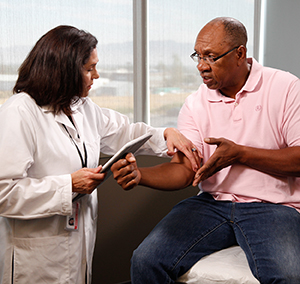
Why have a cortisone injection?
Injecting cortisone can sometimes relieve pain for anything from a sports injury to arthritis. Your healthcare provider may suggest an injection if rest, splints, physical therapy, rehabilitation exercises, or oral medicine doesn’t relieve your pain. Injecting cortisone is simpler than having surgery. And cortisone may provide the lasting pain relief that can help you get out and enjoy life again. Be sure to discuss all choices with your healthcare provider. Injections are usually used no more than 3 to 4 times a year in 1 area of the body.
Getting the injection
Your healthcare provider will start by cleaning and possibly numbing your skin at the injection site. Next you’ll be injected with local anesthetics (for short-term pain relief) and cortisone. The injection may last a few moments. A small bandage will be put over the injection site. You’ll then be ready to go home.
After your injection
After being injected, make sure you don’t injure the treated region. But stay active. Enjoy a walk or some other mild activity. Just be careful not to strain the region that gave you trouble.
The next day
Some people feel more pain after being injected. This is normal, and it will go away soon. Applying ice for
Cortisone injections and diabetes
Cortisone injections can increase your blood sugar for several days after the injection. If you have diabetes, watch your blood sugar closely during this time. Follow your regular plan for what to do when your blood sugar is elevated.

Orthopedics CTA
Find a DoctorRelated Articles
Foot Surgery: Bunions
A bunion is a bony bump. When the distance between the first and second metatarsal bones of the foot is greater than normal, the big toe may turn toward the other toes. A mild bunion may then form causing foot pain and swelling. Bunions are most often found near the joint at the base of the big toe. Bunions tend to run in families. They may cause pain, swelling, and skin irritation.
Achilles Tendon Repair Surgery
Achilles tendon repair surgery is a type of surgery to fix a damaged Achilles tendon. Learn more about the surgery, including why you might need it, what the risks are, how to get ready for it, and what happens during and after the surgery.
Femur Fracture Open Reduction and Internal Fixation
Open reduction and internal fixation (ORIF) is a type of surgery used to stabilize and heal a broken bone. You might need this procedure to treat your broken femur. Read on to learn what to expect before, during, and after this surgery.
Spinal Fusion: Posterior Lumbar
Fusing vertebrae in the lumbar curve spine may help ease lower back and leg pain. Posterior lumbar fusion is done through an incision in your back. The graft is put between the vertebrae in one of two places: in the disk space or between the transverse processes.