A child’s bones heal the same way as an adult’s bones. But since a child’s bones are still growing, there are a few special concerns.
Growth plates
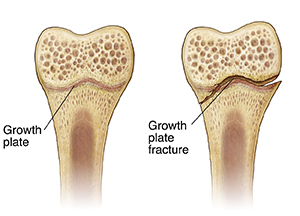
Growth plates are fragile groups of cells at the ends of a child’s long bones (such as the arms and legs). Growth plates make sure that the bones keep growing until they reach full length. If a growth plate is damaged in a fracture, the bone may not grow as it should. Fractures involving growth plates may need more follow-up visits to make sure the bones are growing correctly.
Remodeling
Remodeling happens more quickly in children than in adults. This means a child’s broken bone may not need to be lined up perfectly. As it heals, the bone straightens through remodeling. The younger a child is, the more likely the bones will grow straight with time.

Orthopedics CTA
Find a DoctorRelated Articles
Radiation in a Nuclear Medicine Scan (Child)
A nuclear medicine scan is a type of imaging test. It's done to help diagnose and treat a number of diseases. This type of test uses small amounts of radioactive matter.
Thrush (Oral Candida Infection) (Child)
Candida is a type of fungus. It is found naturally on the skin and in the mouth. If Candida grows out of control, it can cause a mouth infection called thrush. Learn how to care for your child after a thrush diagnosis.
Your Child’s Discharge from the Hospital
Planning for your child’s discharge from the hospital involves all members of your child’s care team. Here are some of the things to know about hospital discharge.
Fever in Children
Fevers are only a symptom of something else happening in the body. Your child can have a fever and not look or feel hot. So always take your child's temperature for at least 1 minute before deciding how serious a fever is.