Learn the safe way to sit to protect your new hip. Follow the instructions below.
Sitting higher
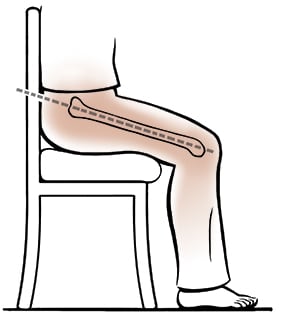
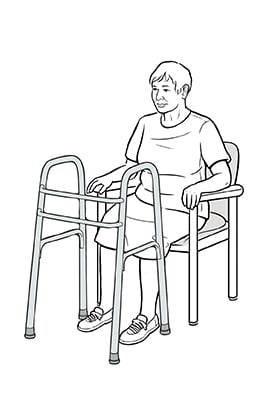
To protect your new hip, you must sit with your knees lower than or level with your hips. To do this, sit in chairs with high seats. Or you can place a firm pillow on the seat of a chair to help raise your hips.
To sit down
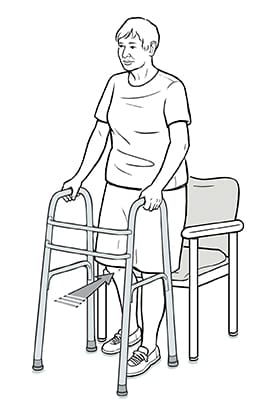
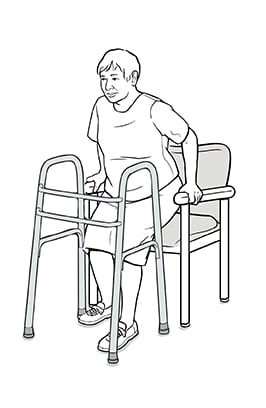
To sit down, back up until the edge of the chair touches your leg. Then, using the armrests to support your weight, lower yourself into the seat. Always keep out in front the leg that was operated on.

Orthopedics CTA
Find a DoctorRelated Articles
After Hip Replacement: Using Your Walker
Learn how to use your walker after hip replacement.
Discharge Instructions: Internal Fixation of a Fractured Femur
Instructions to care for yourself after having internal fixation of a fractured femur.
Adjusting to Limb Loss
Losing a limb can be a profound shock. Everyone reacts to loss in different ways. You may be feeling angry, frustrated, scared, sad, or lonely. These are very common feelings after limb loss. You may go through distinct stages of grieving. Don’t hesitate to ask for the support that you need. You don’t have to go through this alone.
AC Joint Sprain (Adult)
With an AC joint sprain, the ligaments that hold the collarbone to the shoulder blade may be partly or fully torn. In both cases this causes pain and swelling at the end of the collarbone.