Once you are ready for it, your healthcare provider will help you ease back into your active life. You can do certain exercises to help you build up your agility. Agility is ease and quickness of movement. You may need to use a knee brace while doing some activities.
Ask your healthcare provider if you’re ready to do these exercises. If you do too much too soon, you could cause new knee problems. Or you may even reinjure your knee.
Increasing your agility
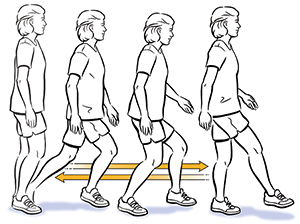
Agility training helps prepare your knee for stops and starts. It also helps with jumping, landing, and changing directions. Keep in mind that your leg must be strong enough to handle this training before you start. Ask your healthcare provider or physical therapist how long to exercise. And be sure to do a variety of workouts. This helps build up all the muscles around your knee:
-
Sideways steps, hops, and shuffles prepare you to go back to sports like skiing and tennis.
-
Short sprints forward and backward help get you ready for stop-and-go activities. These include playing soccer or basketball, or even chasing a toddler.
-
Other exercises help you train for specific activities, such as running. Talk to your healthcare provider.
Returning to favorite activities
Keeping your knee strong and stable is a lifelong commitment. It may take up to a year of steady work to get back the full use of your knee. But as you feel better, you can start doing many of your favorite activities. Just be sure to take it easy at first. You may also need to wear a leg brace for certain sports. For best results, stick with daily workouts for as long as you stay active. And keep doing strength training up to
Orthopedics CTA
Find a DoctorRelated Articles
Discharge Instructions: Internal Fixation of a Fractured Femur
Instructions to care for yourself after having internal fixation of a fractured femur.
Adjusting to Limb Loss
Losing a limb can be a profound shock. Everyone reacts to loss in different ways. You may be feeling angry, frustrated, scared, sad, or lonely. These are very common feelings after limb loss. You may go through distinct stages of grieving. Don’t hesitate to ask for the support that you need. You don’t have to go through this alone.
AC Joint Sprain (Adult)
With an AC joint sprain, the ligaments that hold the collarbone to the shoulder blade may be partly or fully torn. In both cases this causes pain and swelling at the end of the collarbone.
Discharge Instructions: Caring for Your Plaster Cast
A cast helps your body heal by holding your injured bones or joints in place. Here is information on how to take care of your cast.