As you recover from breast surgery, your doctor will tell you when it's safe to start exercising, what kind of exercises you should do, and how much you should do. Your goal is to regain normal arm and shoulder range of motion and use of your arm. This will also improve your strength and prevent scarring from limiting your movement (scar contracture). For your safety, use this handout only as directed by your doctor or physical therapist.
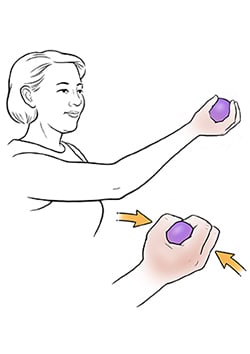
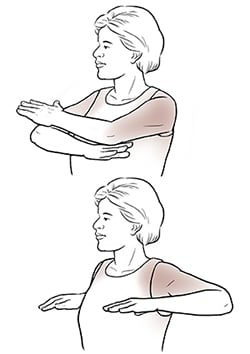
These are two exercises that may be suggested. Be sure to take deep breaths as you do each exercise. Speak with your surgeon and health care team about other exercises that might be right for you.
|
|
|
|
Ball squeeze
|
Arm cross
|
Featured in
Oncology
Find a DoctorRelated Articles
Exercises After Breast Surgery: Wall Climb and Chicken Wing
As you recover from breast surgery, your doctor will tell you when it is safe to begin exercising, what kind of exercises you should do, and how much exercising you should do.
Managing Constipation During Cancer Treatment
Check with your healthcare provider to see if you can increase the fiber in your diet. If you can, try foods such as whole-grain breads and cereals, dried fruits, wheat bran, and wheat germ; fresh fruits and vegetables; and dried beans and peas.
General Nutrition Guidelines During Cancer Treatment
You may have trouble eating or lose your appetite during cancer treatment. Read some tips that may help, including eating small, frequent meals throughout the day.
Nutrition and Cancer: High-Calorie Snacks
To boost your calories, add butter or margarine to puddings, casseroles, sandwiches, vegetables, cooked cereal, breads, and pasta. Add wheat germ to hot cereals, meat dishes, cookie batter, and casseroles.