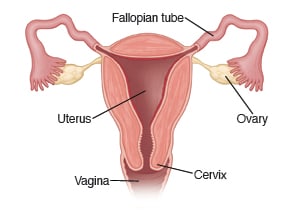
You have a vaginal infection called bacterial vaginosis (BV). Both good and bad bacteria are present in a healthy vagina. BV occurs when these bacteria get out of balance. The number of bad bacteria increase. And the number of good bacteria decrease. BV is linked with sexual activity, but it's not a sexually transmitted infection (STI).
BV may or may not cause symptoms. If symptoms do occur, they can include:
- Thin, gray, milky-white, or sometimes green discharge.
- Unpleasant odor or “fishy” smell.
- Itching, burning, or pain in or around the vagina.
It's not known what causes BV, but certain factors can make the problem more likely. These can include:
- Douching.
- Spermicides.
- Use of antibiotics.
- Change in hormone levels with pregnancy, breastfeeding, or menopause.
- Having sex with a new partner.
- Having sex with more than one partner.
BV will sometimes go away on its own. But treatment is often advised. This is because untreated BV can raise the risk of more serious health problems, such as:
- Pelvic inflammatory disease (PID).
- Preterm delivery (giving birth to a baby early if you're pregnant).
- HIV and some other STIs.
- Infection after surgery on the reproductive organs.
Home care
General care
- BV is most often treated with medicines called antibiotics. These may be given as pills or as a vaginal cream. If antibiotics are prescribed, be sure to use them exactly as directed. And complete all of the medicine, even if your symptoms go away.
- Don't douche or have sex during treatment.
- Ask your doctor if any sex partners should also be treated.
Prevention
- Don't douche.
- If you have sex, take steps to lower your risk:
- Use condoms when having sex.
- Limit the number of sex partners you have.
Follow-up care
Follow up with your doctor as advised.
When to get medical advice
Contact your doctor right away if:
- You have a fever of 100.4ºF (38ºC) or higher, or as directed by your doctor.
- Your symptoms get worse or they don't go away within a few days of starting treatment.
- You have new pain in the lower belly or pelvic region.
- You have side effects that bother you or a reaction to the pills or cream you're prescribed.
- You or any of your sex partners have new symptoms, such as a rash, joint pain, or sores.
Featured in

OB/GYN
Find a DoctorRelated Articles
Vaginal Infection: Yeast (Candidiasis)
Vaginal yeast infections are a type of fungal infection. Talk with your health care provider about whether you can treat it yourself.
Endometriosis
Endometriosis is a condition that occurs when the tissue that lines the uterus begins to grow where it should not. It swells and bleeds like the normal uterine lining. This can irritate the area where the tissue is growing.
Bartholin’s Cyst: Common Treatments
When the opening of a Bartholin's gland becomes blocked, the gland may swell and form a cyst. Treatment depends on various factors, including the size of the cyst, whether it causes symptoms, and whether it's infected.
Cervicitis
Cervicitis is irritation or infection of the cervix. It can be caused by a number of different sexually transmitted diseases.