In vitro fertilization (IVF) is a fertility treatment that involves the union of eggs and sperm outside the body in a laboratory. A fertilized egg (embryo) is then placed in the uterus to grow. In most cases, IVF is done with hormone medicines. These help to increase the chances of success. IVF requires several specific steps.
IVF is used by individuals seeking help in achieving pregnancy. It stands as a successful form of assisted reproductive technology (ART). Talk with your health care provider. They can tell you more about the details, success rates, and costs of IVF.
How IVF works
There are four main steps during IVF:
-
Hormone medicine is used to stimulate the ovaries. This helps them to produce two or more mature eggs.
-
The mature eggs are taken from the ovaries. You will be given medicine (sedation). This is so you won't feel pain. Your health care provider guides a thin needle into your vagina. This is done with the help of ultrasound.
-
The eggs are combined with sperm in a lab. If needed, one sperm can be injected directly into an egg. This is called intracytoplasmic sperm injection (ICSI).
-
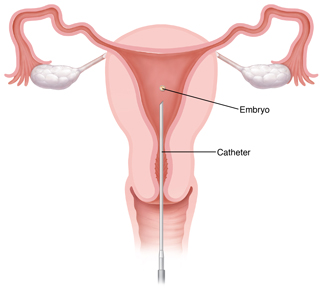
A few days later, one or more embryos are placed into your uterus. For many people, the chance of pregnancy with one embryo is excellent. This reduces the risk of a multiple pregnancy. A multiple pregnancy means two or more babies.
Freezing embryos
Many embryos are created during an IVF cycle. But not all are placed in the uterus. The rest may be frozen for later use. This means you don't have to do another cycle of egg retrieval. It is also less costly.

OB/GYN
Find a DoctorRelated Articles
If Your Baby Is Breech: External Cephalic Version (ECV)
If your baby doesn't move into a head-first position on their own, your healthcare provider may attempt to do an external version. Your healthcare provider will try to rotate your baby by pressing down on your belly. Your healthcare provider may give you medicine to relax your uterus. This can make it easier for them to rotate your baby. During a version, your healthcare provider will use ultrasound to watch your baby.
Taking a Sitz Bath
A sitz bath is a type of therapy done by sitting in warm, shallow water. Learn why and how a sitz bath is done.
Understanding Fertility Problems: Assisted Reproduction
ART may be needed for certain fertility problems. Or it may be used if other treatments haven’t helped. In most cases, these methods use hormone medicines along with other techniques to increase the chances of success.
Pelvic Laparoscopy
Pelvic laparoscopy is often used to diagnose and treat the causes of pelvic problems, such as pain and infertility.