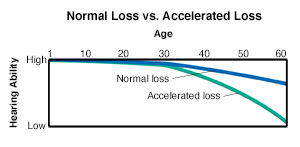
As you age, some hearing loss is normal. Long-term exposure to loud noises may speed up hearing loss. You may lose the ability to hear how loud a sound is. You may also lose the ability to hear certain types of sounds. For instance, you might not be able to hear some of the high-pitched sounds of a child's voice or a fire alarm.
Normal loss
With aging, tiny hair cells in the inner ear change. Nerve cells in the inner ear may also be affected. Most people don't notice normal hearing loss until their middle years. Others might not notice it until late in their lives. It's most often a slow process.
Accelerated loss
Exposure to loud noise may cause hearing loss. It also may cause a ringing in your ears called tinnitus. If your exposure was short, you usually recover your hearing, unless permanent damage was done. But long-term exposure day after day is more likely to affect your hearing for life.
Noise hurts more than your hearing
Did you know that loud noises can affect your whole body? Loud noises can:
-
Raise blood pressure.
-
Disrupt sleep patterns.
-
Cause muscle strain.
-
Cause emotional stress.
-
Harm digestion.

Find Your Provider
Find a DoctorRelated Articles
Rhinitis
Rhinitis is when a reaction occurs that causes a stuffy nose, runny nose, sneezing, and itching. Most types of rhinitis are caused by inflammation. Here's what you need to know.
Anatomy of the Ear
This helpful article and diagram explain how all the parts of the ear work together.
Tinnitus
Tinnitus is the sound of ringing in the ears. It may also be described as roaring, buzzing, hissing, or clicking inside the head. The sounds may come and go. Or they may be ongoing. Read on to learn more.
Anatomy of the Inner Ear
A helpful guide to the inner ear, complete with a diagram.